
By Evan Schwartz
For food and consumer goods manufacturers, packaging has evolved beyond simply protecting a product and ensuring its delivery to the shelf.
Today, packaging decisions influence everything from sustainability initiatives, operational efficiency, brand perception, and regulatory compliance. As consumer expectations continue to shift, manufacturers are under increasing pressure to re-evaluate longstanding packaging strategies. In short, packaging is changing fast.
The companies that will succeed aren’t necessarily those with the biggest budgets or the latest equipment. They’re the ones willing to adapt, experiment, and collaborate with the right OEM partners to address challenges proactively.
New Challenges, New Pressures
If it feels like packaging requirements are changing faster than ever, you’re not mistaken. Food and consumer goods manufacturers face a growing array of challenges, including:
- Sustainability mandates and plastic reduction initiatives
- Adoption of new recyclable and compostable materials
- Increased pressure to improve efficiency and reduce waste
- Regulatory changes across North America and Europe
At the same time, companies must maintain product quality, protect profit margins, and prevent production disruptions. This balancing act leaves many organizations asking a fundamental question: How can meaningful packaging improvements be achieved without introducing operational headaches?
Start with Conversations
A common misconception about packaging innovation is that it begins solely in a lab or engineering department. It starts with conversation.
Successful projects involve early collaboration among manufacturers, packaging OEMs, and material suppliers, each bringing a different perspective:
- Manufacturers understand production realities
- Material suppliers know what’s achievable with emerging substrates and film structures
- Packaging OEMs understand how materials perform in real-world production environments
When these perspectives align, innovation happens much faster and with far less risk.
The Rise of Flexible Packaging
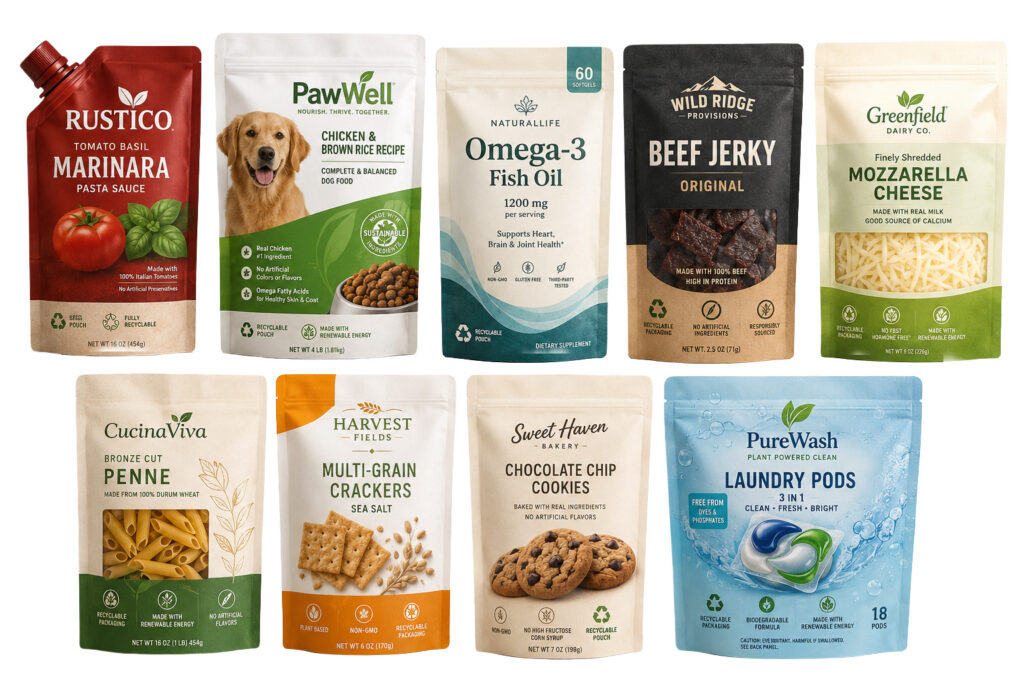
One of the most significant shifts across the industry is the move from rigid to flexible packaging solutions. According to Future Market Insights, a Delaware-based market research firm, the flexible packaging market is projected to grow from $332.7 billion in 2025 to more than $550 billion over the next decade, driven largely by sustainability goals and reduced material usage.
Manufacturers are evaluating flexible options to meet multiple objectives simultaneously, whether it’s sustainability goals, regulatory compliance, transportation efficiencies, or consumer demand. But, transitioning to flexible packaging presents questions such as:
- Will the new package protect the product?
- Can it maintain shelf life?
- Will it be compatible with existing equipment?
- Can current production speeds be maintained?
These questions highlight the importance of testing and validation. It’s not enough to generate new ideas. Manufacturers need evidence that new solutions will work on the production floor.
Sustainability, Delivered
Recent advances in sustainable packaging materials are promising. Just a few years ago, many recyclable and paper-based film structures posed major production challenges, with some materials running inconsistently, particularly on older equipment. Now, thanks to innovations from material suppliers like CL&D, a ProMach brand, many sustainable structures perform far better than earlier counterparts, offering manufacturers more options than ever before.
Achieving sustainability goals doesn’t require a complete equipment overhaul. Through careful testing, process optimization, and targeted upgrades, companies can extend the life of existing machinery while progressing toward their environmental objectives, a win for both sustainability initiatives and capital planning.
Technology Progress Opens New Doors
Materials aren’t the only thing evolving. Packaging machinery technology continues to advance, providing unprecedented flexibility. With the proliferation of SKUs demanded by retailers such as club stores, versatile equipment that can handle diverse products is essential. Modern systems featuring advanced motion control, automation, and intelligent designs allow packaging lines to manage complex packaging requirements with greater precision and consistency.
Collectively, these technological advancements give manufacturers the flexibility and freedom to serve customers more effectively and gain a competitive edge.
Looking Ahead
The pace of change is unlikely to slow down. Over the next decade, industry focus will include:
- Reduction of plastic use
- Adoption of recyclable and compostable packaging
- Increased use of paper-based alternatives
- Improved package-to-product interfaces
- Extended producer responsibility initiatives
- Adoption of global sustainability standards
Many of these trends originated in Europe but are no longer future considerations for North American manufacturers. Through state-level Extended Producer Responsibility (EPR) programs and evolving sustainability requirements, these pressures are already influencing packaging decisions across the US.
For example, the EU’s Packaging and Packaging Waste Regulation (PPWR), which goes into effect August 2026, is establishing new, tougher standards for packaging sustainability, recyclability, and compliance throughout Europe. This means US brands selling products in Europe must ensure their packaging complies with PPWR regulations to maintain market access.
At the same time, several US states have adopted EPR laws that assign producers greater financial and reporting responsibility for the packaging they place into the market, including fines for brands that use non-eco-friendly packaging. As implementation timelines begin taking effect, manufacturers and brands must reassess their packaging materials, recyclability claims, and long-term sustainability strategies to avoid costly penalties and prepare for evolving compliance requirements and manage costs.
Packaging decisions are increasingly being shaped not only by consumer expectations, but also by regulatory frameworks that are becoming more aligned across global markets. Manufacturers that adapt early will be better positioned to remain competitive and compliant.
As brands around the world evolve to meet future sustainability goals, so must their packaging strategies. Packaging innovation is about solving core business challenges: reducing risk, improving efficiency, exceeding customer expectations, and staying ahead of regulatory changes.
ProMach’s Flexible Packaging Group is strategically positioned to help customers anticipate and meet tomorrow’s packaging challenges. We build strong partnerships, leverage our expertise, and embrace innovation as a continuous process rather than a one-time project. Our expertise is your pathway to packaging innovation.
Evan Schwartz is the Flexible Packaging Group’s Southeast Regional Sales Manager. He can be reached at Evan.Schwartz@ProMachBuilt.com.
Subscribe to our email list for the latest in flexible packaging news.

Bartelt delivers reliable, long-lasting pouching and cartoning solutions to food and non-food industries. A pioneer in automated packaging, Bartelt was the first to develop intermittent motion HFFS pouching machines. Today, Bartelt offers durable solutions for both primary and secondary packaging, from simple to advanced applications.