
By Chris Shay
As manufacturers look to improve throughput and efficiency, many begin by automating the front end of the packaging line. For example, installing a vertical form fill seal (VFFS) machine can significantly increase production speeds and reduce manual labor. But without the right downstream support, those improvements may not be fully realized. Often, the real bottleneck isn’t the filling machine; it’s what comes next.
That’s where the cartoner plays a critical role. Cartoners serve as the bridge between faster filling speeds and a fully automated line. Choosing the right cartoner for your specific applications and output goals allows packaging operations to keep up with upstream equipment while laying the groundwork for further automation. When paired correctly with a VFFS machine and end-of-line equipment, a cartoner doesn’t just package products; it helps unlock the full potential of your entire production line.
For many small- to mid-sized businesses, switching to automation begins with installing a VFFS machine. As fill rates increase, downstream processes often struggle to keep up, forcing manufacturers to slow production or add labor. In this situation, automating cartoning operations becomes the next practical step for maintaining efficiency and maximizing output.
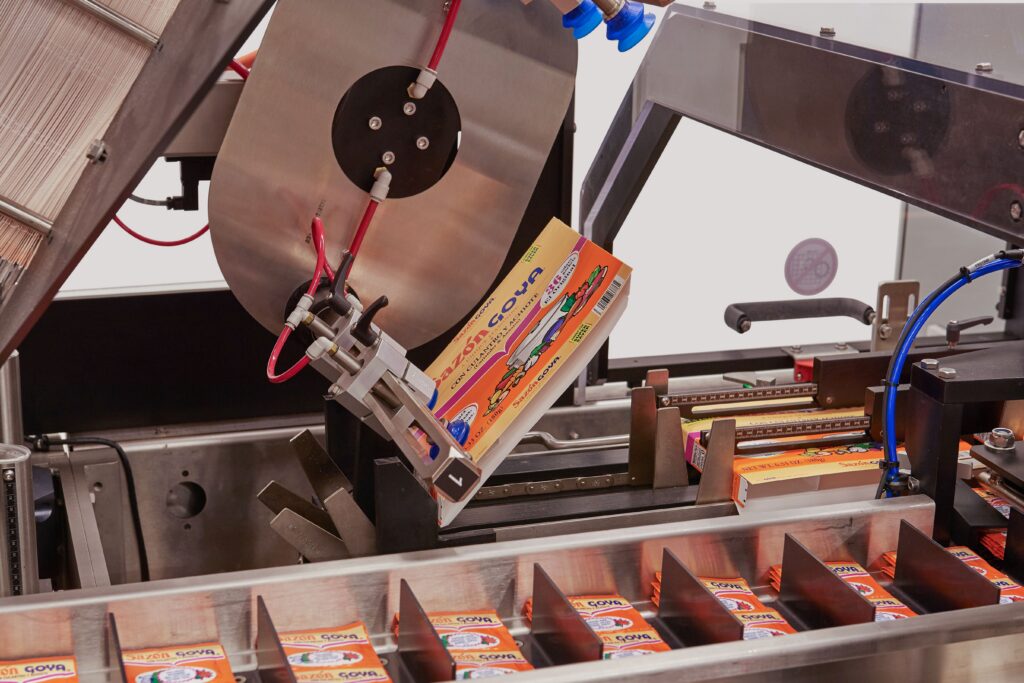
The two primary types of end-load cartoners are continuous motion and intermittent motion. Continuous motion cartoners run nonstop and are designed for high-speed applications. These machines are well-suited for packaging single bags into cartons, such as cereal, where product flow is fast and consistent. Applications like these are ideal for machines like Bartelt’s BCC-L Cartoner, which delivers flexible horizontal cartoning speeds of up to 400 cycles per minute.
Intermittent motion end-load cartoners stop between each cycle to allow specific actions to occur. This design is ideal for applications that require multiple bags to be stacked and loaded into a carton. Fillling and properly orienting products takes time, and intermittent motion cartoners are designed to sync with the line’s start-and-stop cadence. Bartelt’s VP-1 Variety Pack Cartoner is a servo-driven, intermittent motion, horizontal end-load system built for packing a variety of snack packages into a single carton, with speeds reaching up to 40 cartons per minute depending on product and configuration.
Automating cartoning processes allows manufacturers to better match the speed and efficiency of their VFFS equipment. Once cartoning constraints are resolved, attention can shift to additional end-of-line automation, such as case packing, palletizing, and shrink wrapping. Automating these steps further improves line efficiency while reducing labor demands in a gradual, budget-conscious way.
When manufacturers focus on increasing output, faster fillers are often the first consideration. However, without an automated cartoning solution to support that speed, packaging lines quickly hit their limits. Cartoners are often the first downstream system that must evolve to enable higher throughput and more efficient operations.
By automating cartoning, manufacturers can better align upstream and downstream processes, reduce reliance on manual labor, and build a more scalable packaging line. From there, additional automation can be added strategically as production demands grow. For companies looking to improve their automation capabilities without unnecessary complexity, the cartoner is a practical and impactful place to start.
Chris Shay is the South Central Regional Sales Manager of ProMach’s Flexible Packaging Group. You can reach him at Chris.Shay@ProMachBuilt.com.
Subscribe to our email list for the latest in flexible packaging news.

Bartelt delivers reliable, long-lasting pouching and cartoning solutions to food and non-food industries. A pioneer in automated packaging, Bartelt was the first to develop intermittent motion HFFS pouching machines. Today, Bartelt offers durable solutions for both primary and secondary packaging, from simple to advanced applications.