
There once was a time when rebuilding horizontal packaging machines was commonplace. The process typically started with a customer shipping the machine back to the manufacturer or a rebuild facility. From there, the machine would be stripped down and all essential parts, including gearboxes, assemblies, line shafts, bearings, and other mechanical linkage mechanisms, would be removed. Those parts would then be replaced, sub-assemblies rebuilt, and the machine shipped back to the customer for final reassembly. This was a costly, time-consuming process that left customers with extended downtime.
Rather than rebuilding machines, manufacturers and integrators are increasingly focused on upgrading them by replacing older solid-state controls or obsolete PLCs with today’s technology. Upgrading packaging machinery provides customers with several advantages, namely increased efficiency, greater precision, and more flexibility in production runs.
The Shift from Rebuild to Upgrade
In the past, rebuilding made sense for a few key reasons. Mechanical components like gearboxes and linkages were widely available and reusing them helped keep costs manageable. At the same time, advanced electronics such as servo motors and modern control systems were expensive, making upgrades less attractive.
Today, that equation has flipped for several reasons. Many older mechanical parts have become obsolete, are no longer supported, or are difficult to source. In addition, they are often significantly more expensive than they once were.
Meanwhile, modern automation technology has become more accessible and affordable. As a result, full rebuilds often cost more and deliver less value than targeted upgrades.
What an Upgrade Really Means
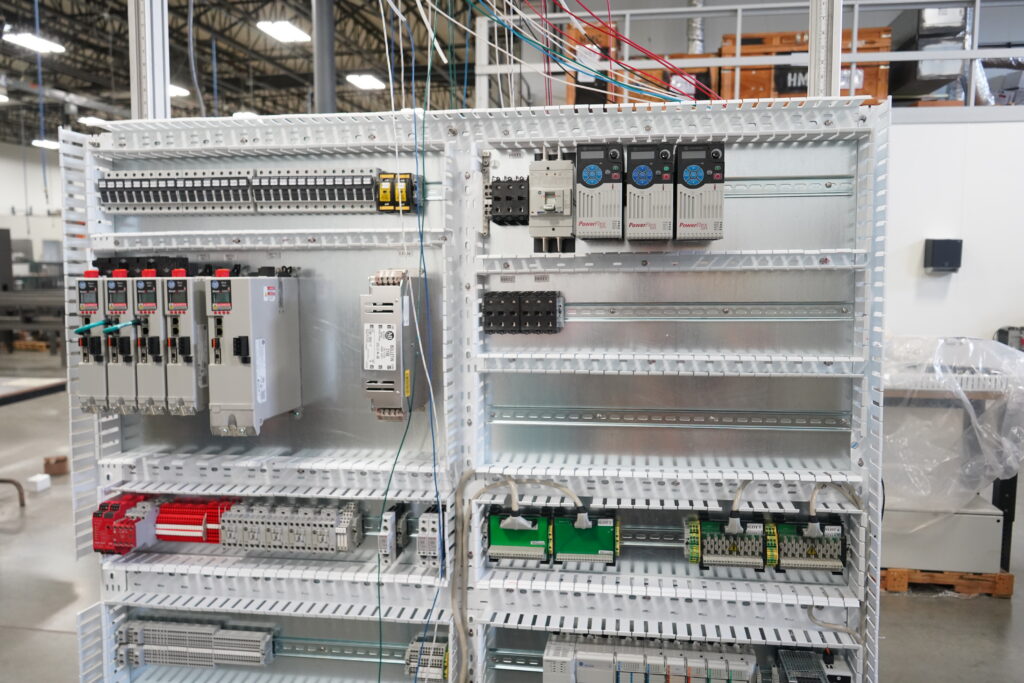
Upgrading a machine doesn’t mean starting from scratch. Instead, it focuses on replacing the most critical and outdated components, primarily the control system.
This typically includes:
- Installing new programmable logic controllers (PLCs)
- Upgrading touchscreens and operator interfaces
- Replacing outdated I/O systems
- Updating or rewriting control software
In many cases, these upgrades can be completed directly at the customer’s facility in just a few days, minimizing disruption while delivering immediate improvements.
The Hidden Risk of Waiting Too Long
Despite the benefits, many companies delay upgrades. The problem with this approach is that it leaves too much to chance. A “run it until it breaks” mindset is common and something we’ve all been guilty of. However, this reactive approach often leads to bigger problems.
When a critical component fails, especially an obsolete PLC or touchscreen, repairs become urgent and unpredictable. Replacement parts may be difficult to find, sometimes requiring costly last-minute sourcing. Downtime can stretch from days into weeks, and production losses quickly outweigh the cost of a planned upgrade.
In contrast, proactive upgrades are controlled, predictable, and far less disruptive.
The Real Benefits of Modernization
By upgrading an older packaging machine, you’re giving it a second life through efficiency, productivity, and modernization. Upgrading control systems doesn’t just prevent failures, it unlocks new capabilities.
Modernized machines offer:
- Improved reliability with supported, current technology
- Remote access and diagnostics, allowing faster troubleshooting
- Greater flexibility to add new features or adapt to changing needs
- Easier programming and integration with today’s systems
- Warranty protection on newly installed components
For many companies, these benefits extend the life of their equipment while bringing performance closer to that of a new machine.
Clearly, the industry is evolving, and so is the definition of smart maintenance.
Full machine rebuilds are no longer the default solution. Instead, forward-thinking companies are embracing control system upgrades as a way to reduce risk, control costs, and stay competitive. Don’t wait for an unplanned failure and pay the price in downtime. Be proactive and upgrade on your schedule.
Subscribe to our email list for the latest in flexible packaging news.
ProMach’s Flexible Packaging Group (FPG) brings together the expertise of Ossid, Matrix, Bartelt, HMC, and CL&D to offer a single, trusted point of contact for diverse packaging needs. By working together as one team, the FPG makes it easier to make decisions and provides customized, complete solutions from the first idea all the way to the finished product.